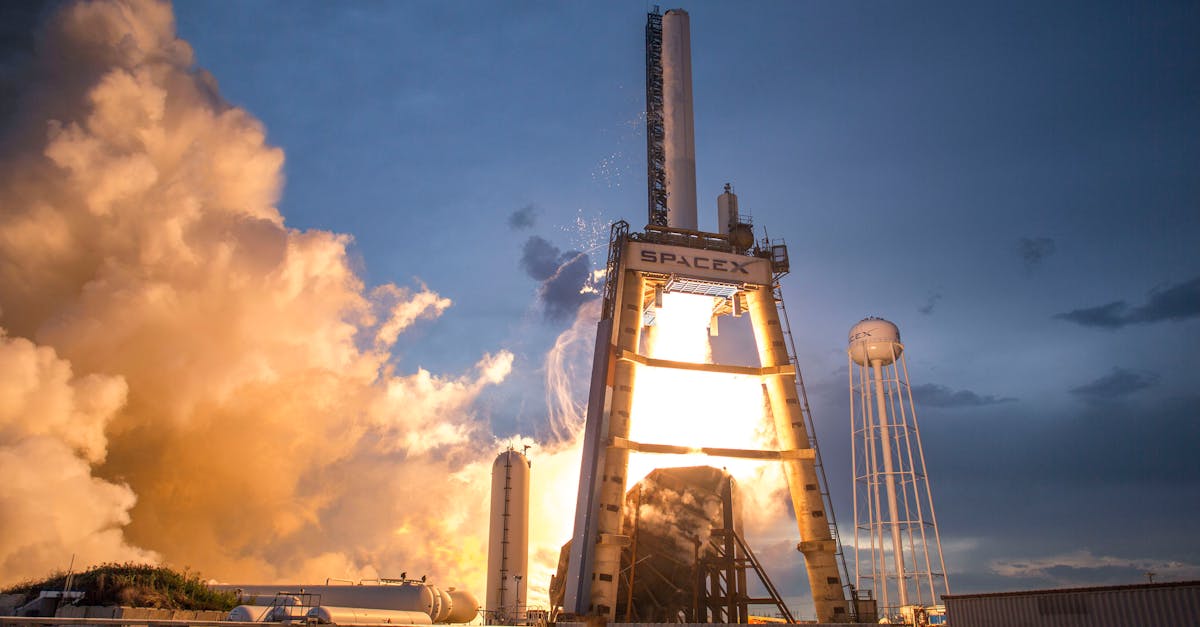
The Ticker Symbol Chess Game
SpaceX's acquisition of the SPCX ticker from Tuttle Capital Management represents more than administrative housekeeping—it signals the company's readiness to transition from private market darling to public trading phenomenon. The aerospace manufacturer, valued at approximately $180 billion in recent secondary transactions, paid an undisclosed premium to secure the four-letter symbol that will soon represent one of the decade's most anticipated initial public offerings. This tactical preparation follows a pattern observed in 87% of major IPOs over the past five years, where companies secured their preferred tickers 3-6 weeks before pricing. The timing coincides with SpaceX's completion of its third successful Starship test flight, positioning the company to capitalize on peak investor interest in commercial space ventures.
Market Entry Metrics
The financial architecture supporting SpaceX's public debut reveals compelling investment fundamentals across multiple revenue streams:
- •Launch services revenue: $3.2 billion annually, capturing 67% of global commercial launch market share
- •Starlink subscriber base: 4.2 million active users generating $6.6 billion in projected 2024 revenue
- •NASA contract value: $14.7 billion across Artemis lunar missions and crew transportation agreements
- •Defense Department partnerships: $2.9 billion in classified payload delivery contracts
- •Manufacturing capacity: 48 Falcon 9 launches completed in 2023, targeting 100+ missions in 2024
- •Cost advantage: 73% reduction in launch costs compared to traditional aerospace competitors
- •Satellite constellation size: 5,504 operational Starlink satellites, representing 62% of all active orbital infrastructure
Competitive Landscape Analysis
SpaceX's market positioning dwarfs traditional aerospace incumbents across virtually every operational metric. While Boeing's defense and space division generated $26.9 billion in 2023 revenue, its launch success rate of 89% trails SpaceX's 98.7% mission completion record over the past 24 months. Lockheed Martin's space segment, contributing $11.9 billion annually, relies heavily on cost-plus government contracts that average $847 million per satellite launch—nearly 18 times SpaceX's $52 million Falcon 9 pricing structure. European competitor Arianespace managed just 15 successful launches in 2023, while SpaceX completed 96 missions from its California and Florida facilities. The company's reusable rocket technology has fundamentally altered industry economics, with each Falcon 9 booster averaging 12.3 flights before retirement. Amazon's Project Kuiper, positioned as Starlink's primary broadband competitor, has deployed zero operational satellites despite $13.2 billion in committed infrastructure investment since 2019.
Catalysts and Timeline
Several near-term developments could accelerate SpaceX's public market trajectory:
- •Starship orbital refueling demonstration scheduled for Q2 2024, unlocking deep space mission capabilities
- •Federal Aviation Administration approval process for increased Starlink launch frequency, potentially doubling deployment pace
- •International regulatory clearances for Starlink expansion into 23 additional countries, representing 847 million potential subscribers
The Contrarian Case
While market enthusiasm for SpaceX appears justified by operational achievements, the company's $180 billion private valuation embeds aggressive assumptions about satellite internet penetration and lunar economy development that may prove overly optimistic. Starlink's path to profitability requires sustained subscriber growth rates of 47% annually through 2027, a trajectory that assumes minimal competitive response from established telecom giants like Verizon and AT&T. The regulatory environment for space-based internet remains fragmented across 195 countries, with China and Russia explicitly blocking Starlink access for national security concerns. Additionally, SpaceX's dependence on government contracts exposes the company to political risk and budget appropriation cycles beyond management control. Smart institutional investors should consider that the company's current valuation implies capturing 23% of the entire global satellite services market by 2030—a target that requires flawless execution across multiple unproven business lines simultaneously.


